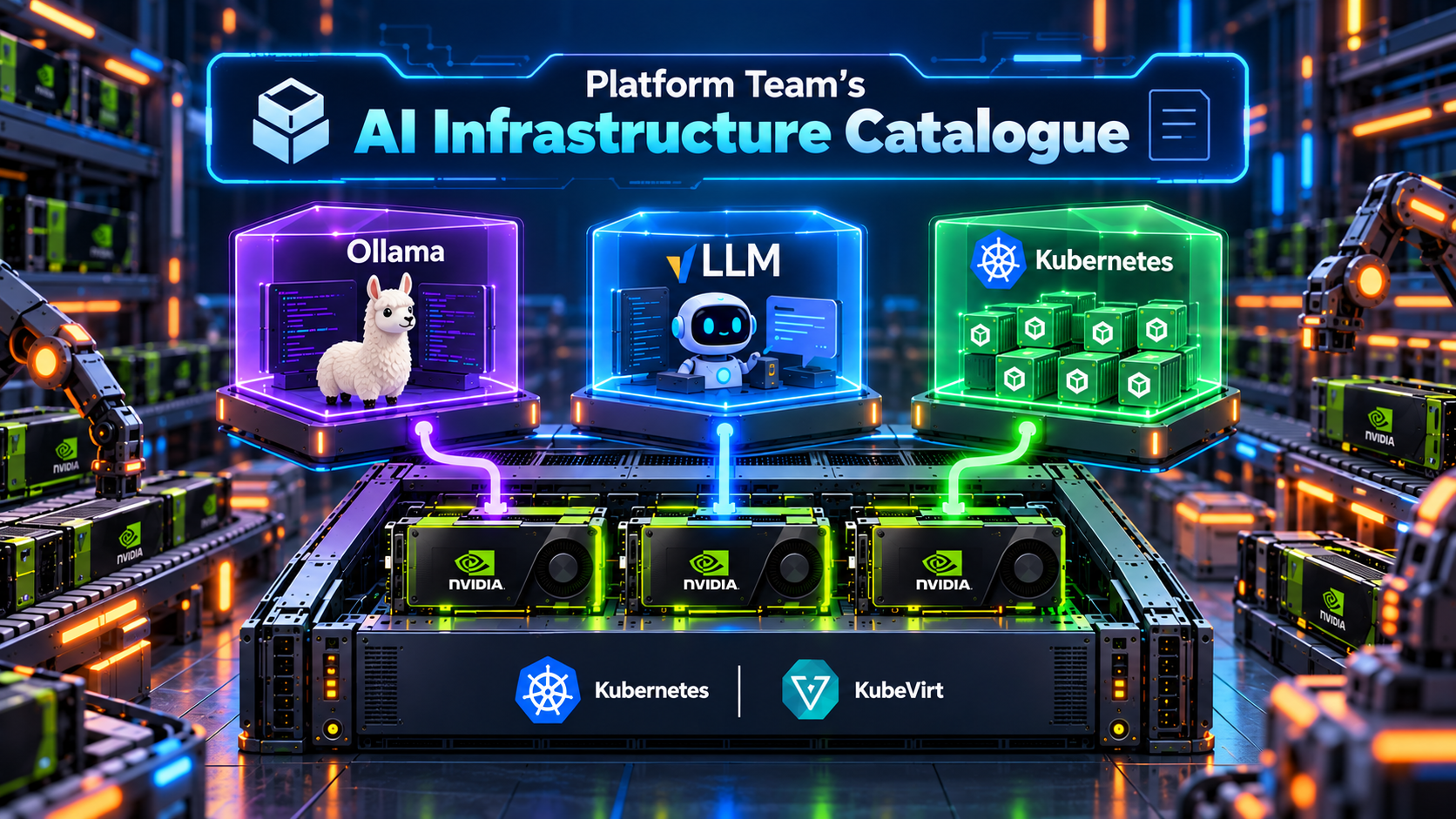
Building an AI factory on Kubernetes: a GPU catalog for every customer
How a platform team can build an AI factory on Kubernetes and grow its GPU catalog with KubeVirt: a plain GPU VM with Ollama, and a GPU Kubernetes with HAMi, both on one two-L4 server.
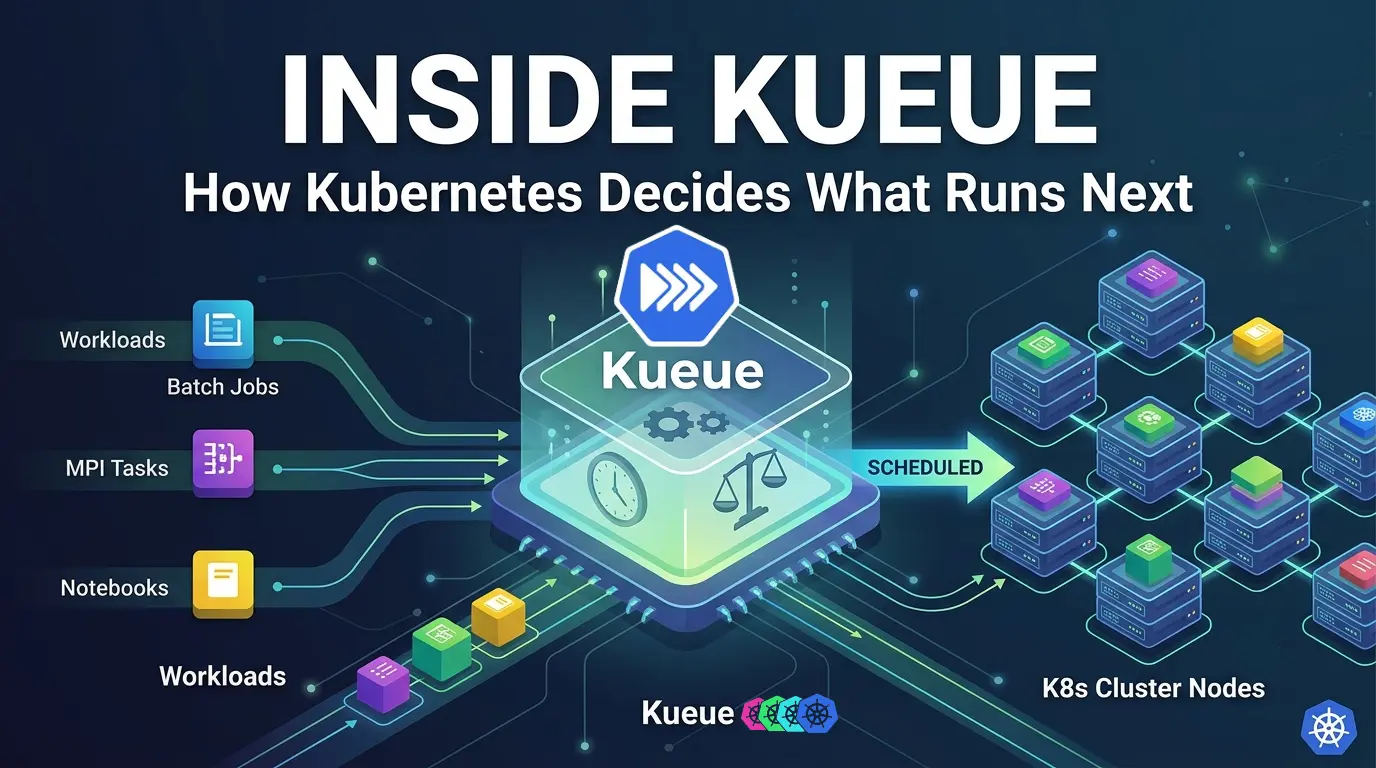
Inside Kueue: How Kubernetes Decides What Runs Next
See how Kueue brings order to overloaded Kubernetes clusters by intelligently managing batch workloads with a hands on demo.
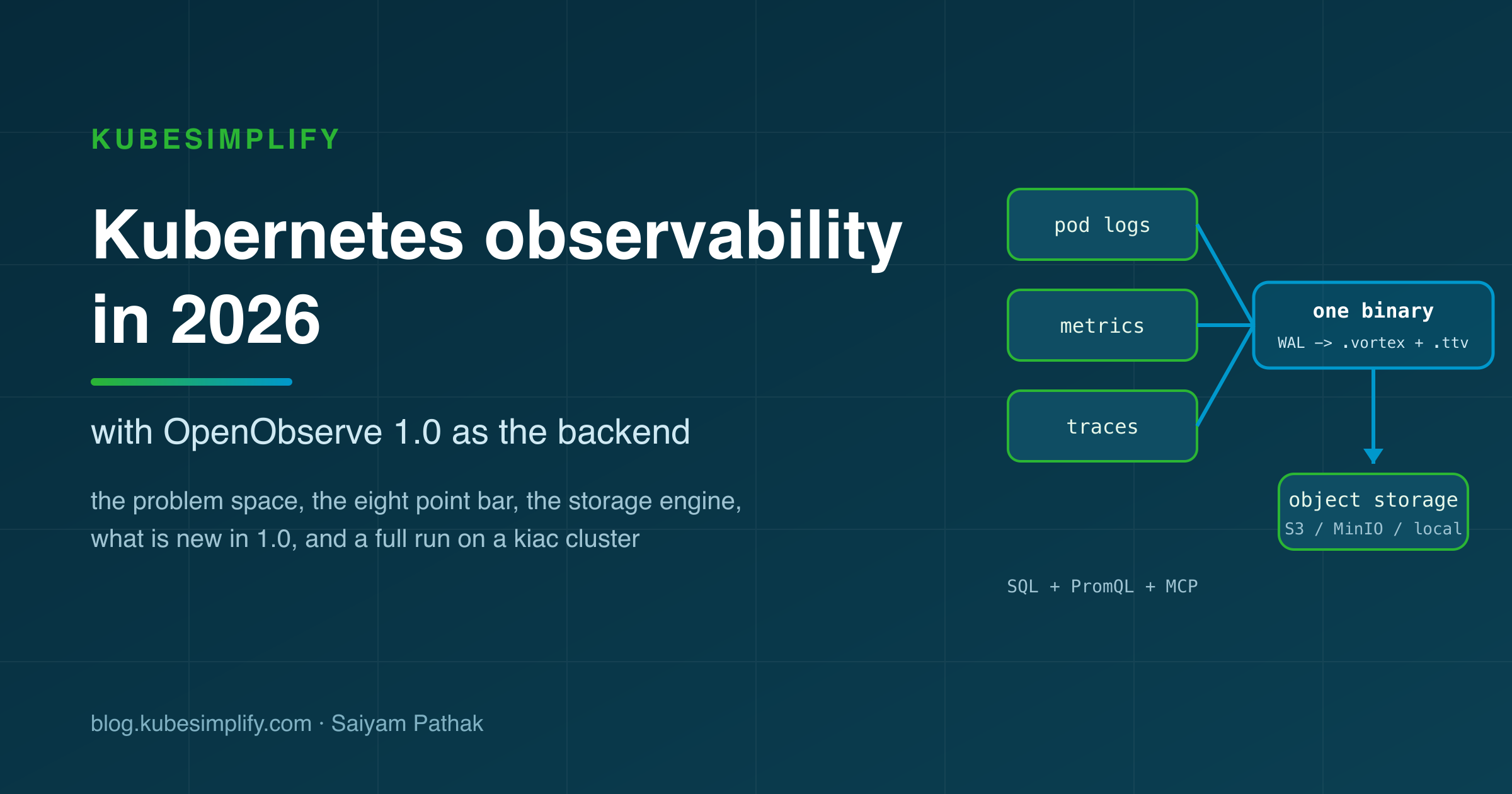
Kubernetes observability in 2026 with OpenObserve 1.0 as the backend
A 31 ms full-text search over 4.2 million Kubernetes log rows, and a whole cluster on 43m CPU under 600 MiB: a hands-on run of OpenObserve 1.0 as the backend.
Running a big LLM across multiple GPUs with vLLM
A runbook for serving a model too big for one GPU: download to serving in seven steps, with every vLLM flag, startup log line and real error explained, plus tensor, pipeline and expert parallelism benchmarked head to head on a 235B model across four RTX PRO 6000 cards.
Zero Trust in Practice: Migrating from Istio Sidecar to Ambient Mode
A hands-on comparison of Istio sidecar and ambient mode for zero-trust service mesh. Same app, same policy, two architectures proven step by step on a local cluster.
Running Qwen3.8-Flash-Next on a DGX Spark and RTX PRO 6000
Qwen dropped Qwen3.8-Flash-Next this week, and the first thing I saw on my timeline was somebody saying it will not fit on a single DGX Spark. The NVFP4…
The Local LLM Glossary: Every Term, Flag, and Number in Plain English
Plain-English definitions for every term you hit in local LLM posts: prefill and decode, tokens per second, FP8 and NVFP4, Q4_K_M, KV cache, YaRN, Gated DeltaNet, speculative decoding, and every vLLM, llama.cpp, and Ollama flag worth knowing.
Running Qwen3.8-27B on DGX Spark
Qwen3.8-27B on DGX Spark with llama.cpp, Ollama, vLLM, and SGLang: the recipes, the tokens per second I measured, MTP speculative decoding, and the sharp edges I hit along the way.
I Ran an AI SRE Copilot on My Own Hardware. Here Is What It Actually Does.
Running NudgeBee v1.4.0 end to end - a self-hosted AIOps platform behind AI-SRE, AI-FinOps, AI-K8sOps, and agentic automation - on a Mac, a kiac cluster, and a DGX Spark.
Running Nemotron 3.5 Lightning on DGX Spark
NVIDIA's new Nemotron 3.5 Lightning on DGX Spark: how to run it with Ollama and vLLM, the tokens per second I measured, and how the two paths compare.
HAMi Dynamic MIG on RTX PRO 6000: A Live Kubernetes Test
Hands-on HAMi Dynamic MIG test on Kubernetes and RTX PRO 6000 Blackwell: setup commands, real allocations, mixed profiles, reclamation, and recovery.
Devin Outposts on Kubernetes: Why Your AI Agent Needs Your Cluster
Devin Outposts runs AI coding agent sessions as pods on your own Kubernetes cluster, with an open-source operator to manage the fleet.
How to Share GPUs in Kubernetes at Scale with HAMi (Software vGPU Slicing)
Share NVIDIA GPUs in Kubernetes with HAMi software vGPU slicing: memory and compute limits, Helm configuration, a verified PyTorch manifest, a real RTX PRO 6000 OOM test, and Prometheus monitoring.
Slicing GPUs in Kubernetes with NVIDIA Multi-Instance GPU (MIG)
GPU sharing in Kubernetes explained: time-slicing vs MPS vs MIG, every nvidia-smi command to enable and disable MIG on one GPU or eight, GPU Operator automation, pitfalls, and DCGM monitoring.
Day 5: Local LLM Inference Engines, Wrappers, and What to Pick
A beginner-friendly guide to local LLM inference, with the same Qwen model tested through Ollama, llama.cpp, Docker Model Runner, vLLM, SGLang, and TensorRT-LLM on NVIDIA DGX Spark.